Waste Management
Chemical solutions are the primary raw material in the plating process. JLT follows a principle of prioritizing the use of low-pollution materials. Pollution control equipment is used in our processes to reduce the concentration of pollutants generated. Furthermore, the storage and handling of hazardous chemicals comply with the Toxic and Concerned Chemical Substances Control Act. The company also conduct regular health check-ups for employees engaged in specific operations to ensure their health.
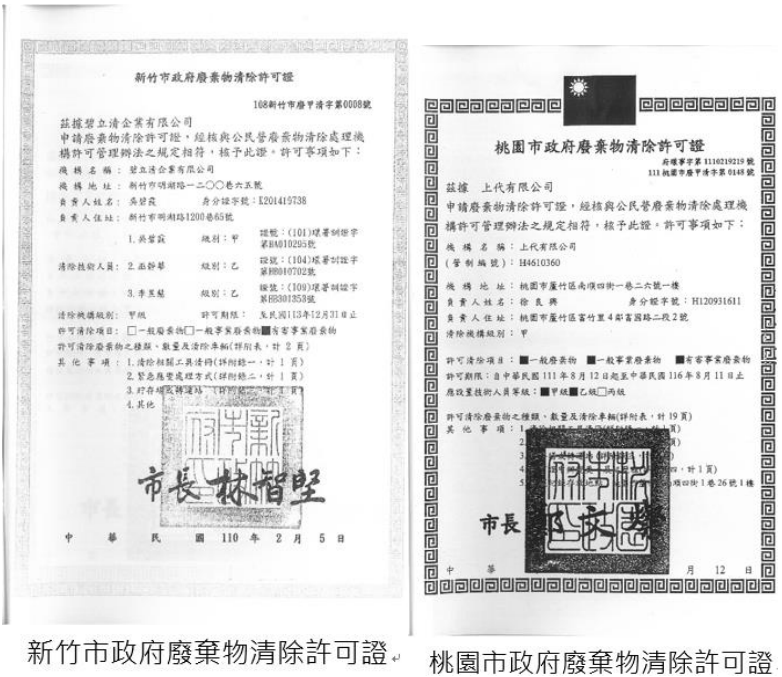
General business waste is primarily sent to privately operated treatment facilities for processing, while hazardous business waste is entrusted to qualified privately operated waste treatment facilities for processing. All of the company's waste is handled in accordance with the relevant regulations of the Waste Disposal Act.
JIH LIN has designated specific personnel to manage the waste and adhere to waste classification, storage, and legal disposal practices. When some waste materials have value for recycling and reusing, legal institutions are authorized for legal recycling, thereby contributing to the creation of recycled products. In the production processes, chemical testing is employed to control the use of raw materials on the production lines, reducing the unnecessary consumption of chemicals. This approach helps minimize pollutants and waste while the purposes of production costs reduction and environmental protection both are considered.
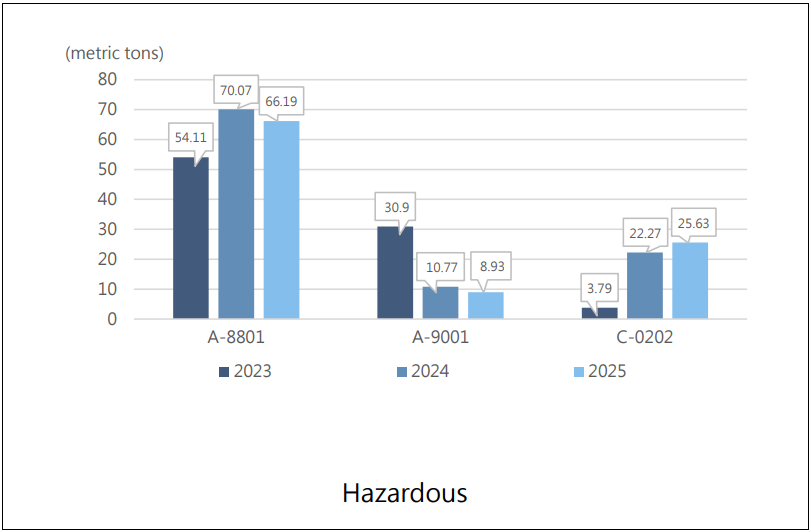
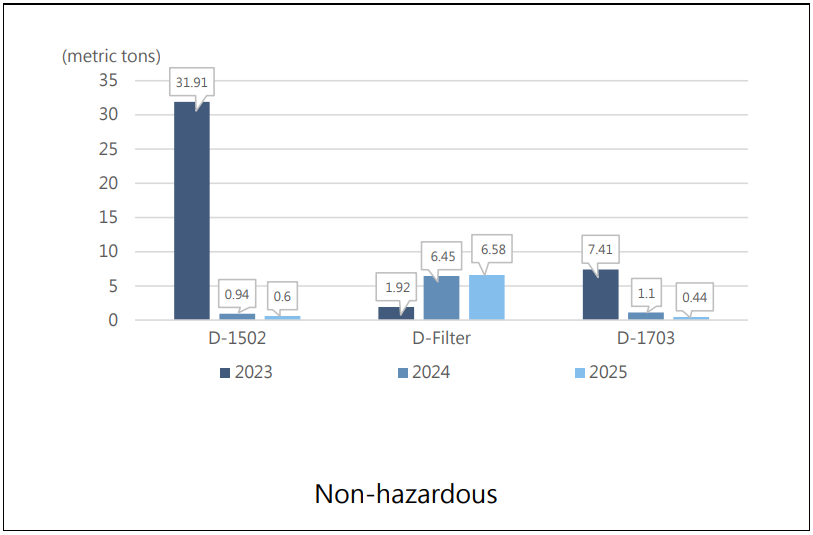
In terms of the wastewater produced in the degreasing process, the largest portion of waste generated is from sludge produced after wastewater treatment, such as sludge. To implement the concept of"energy conservation and waste reduction,"JIH LIN is committed to evaluating the feasibility of hazardous waste reduction schemes to reduce the output of hazardous waste. Due to external factors affecting production capacity adjustments in 2025, the total volume of hazardous industrial waste generated this year decreased by 2.3% compared to 2024. Among this, sludge recycling and reuse reached 66.19 metric tons, accounting for approximately 66%. Looking ahead, the company will continue to deepen the resource circular economy, actively assessing feasible pathways for waste resource utilization and source reduction. The detailed waste statistics are presented in the table below: